

My Country Boy Limo. 06 LBZ
- Thread starter 1TRIKHD
- Start date
You are using an out of date browser. It may not display this or other websites correctly.
You should upgrade or use an alternative browser.
You should upgrade or use an alternative browser.

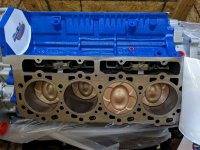

Fancy!!!!

Smurfs had their way with it....But why is it blue?

One thing I have questions on still, is how to wire up my single lithium battery. It's mounted under the bed on the passengerside of the truck, as well as the push/ style master cutoff switch. Was hoping some one can get me pointed in the right direction as far as how I should go about doing this. I have somewhat of an idea, from doing some reading on multiple forums. I was just hoping the fine gentlemen of this forum could help a newbie out lol. Thanks guys
Negative straight to chassis. Power to switch Switch Forward to the engine as usual.
You could put a resettable breaker inline between the switch going forward incase you get a short.
You could put a resettable breaker inline between the switch going forward incase you get a short.
Last edited:
1/0 should be big enough for those runs or should I do 2/0?Negative straight to chassis. Power to switch Switch Forward to the engine as usual.
You could put a resettable breaker inline between the switch going forward incase you get a short.
The larger wire has more Ampacity. I think the 2/0 is what we used when we relocated the battery to the rear on my old hot rod. But it's been soooo long since I messed with any of that stuff. That thing never had an issue until the Shock mount broke and pierced the positive cable. It was all down hill from there since I didn't have the means to build a new frame. The 50+ year old frame was rusting from the inside out and I need reliable transportation...

It really depends on how much voltage drop you are willing to except. Charts such as this one can work for many things if you understand what it's doing.
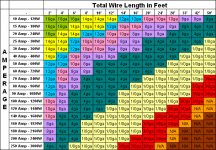
But as you look over other charts from different sources you'll notice they tend to be all over the place in gauge recommendations. Here it's probably going to land in the 1/0 gauge range for your application. But if you use a voltage drop calculator like this one: https://www.calculator.net/voltage-...ceunit=feet&eres=350&x=Calculate&ctype=nec you get a much better idea what's going on
Example, use 350 amps DC and 10 feet with 1/0 wire it has a 0.83 volt drop. This is ok. Do the same for a 2/0 gauge it's 0.70 volts, a little better. Both acceptable. But if you account for the connections adding a little it may end up at 1 volt or maybe slightly more for the 1/0 gauge. Then add a weak battery and cold weather. If the voltage sag on the battery is 10 volts and the cranking current now up to 400 amps, not even counting any connection resistance the voltage is now at 9 volts for 1/0. That is pushing the limit on being able to start the engine. So if you can get the largest you can afford. Or consider your situation.
Good lithium batteries made for starting engines are known for not having as much sag under heavy draw. So run the calculator for yourself and see what you will need. I suspect that most people can get away with 1/0 and few will need to jump to 2/0 or more. For me, I'd try and keep the voltage at the starter 10 volts or more but sometimes that's not practical. Especially if the batteries are not new. Which isn't really a wire gauge issue
But as you look over other charts from different sources you'll notice they tend to be all over the place in gauge recommendations. Here it's probably going to land in the 1/0 gauge range for your application. But if you use a voltage drop calculator like this one: https://www.calculator.net/voltage-...ceunit=feet&eres=350&x=Calculate&ctype=nec you get a much better idea what's going on
Example, use 350 amps DC and 10 feet with 1/0 wire it has a 0.83 volt drop. This is ok. Do the same for a 2/0 gauge it's 0.70 volts, a little better. Both acceptable. But if you account for the connections adding a little it may end up at 1 volt or maybe slightly more for the 1/0 gauge. Then add a weak battery and cold weather. If the voltage sag on the battery is 10 volts and the cranking current now up to 400 amps, not even counting any connection resistance the voltage is now at 9 volts for 1/0. That is pushing the limit on being able to start the engine. So if you can get the largest you can afford. Or consider your situation.
Good lithium batteries made for starting engines are known for not having as much sag under heavy draw. So run the calculator for yourself and see what you will need. I suspect that most people can get away with 1/0 and few will need to jump to 2/0 or more. For me, I'd try and keep the voltage at the starter 10 volts or more but sometimes that's not practical. Especially if the batteries are not new. Which isn't really a wire gauge issue
Skip the "oxygen free" stuff and spend the savings on larger gauge or something else.I'll be using Oxygen free copper for the wire

Question on copper wire: When running a long battery cable like this, should you use fine-strand or coarse-strand wire?
Both will carry the same current and have the same rating, so it comes down to ease of installation and vibration resistance. Fine strand wins both of these. Coarse strand will work harden and start breaking the strands around the high stress areas like the crimps and connections points before fine strand will. And if you loose a few strands on the fine it's not as big of a deal as loosing a few from a coarse strand as it's a smaller percentage of the total copper.Question on copper wire: When running a long battery cable like this, should you use fine-strand or coarse-strand wire?
And if you are crimping then connectors, many of the crimping tools don't do so well on coarse strand wire and you may not get as tight of a connection. Thus increasing the resistance and chance of corrosion at the crimp

One thing to keep in mind. If you look back at the NHRA rule, it states the switch must interrupt all electrical functions. If you tie your alternator into the cold side of the switch, the truck will continue to run off the alternator when the switch is turned off even though you disconnected the battery. In order to make the switch kill everything, you need to run your alternator charge wire all the way back to the battery and not tie it into the battery cable anywhere after the switch. As far as battery cable gauge question goes, we used 3/0 gauge welding cable.

Good tip i never thought about that. Weld cable would work perfect in this scenario
Appreciate the help Josh, one of the answers I was looking for. Question, could you just run the charge wire off the alternator back to the starter and have it work that way as well, or am I ass backwards? ?One thing to keep in mind. If you look back at the NHRA rule, it states the switch must interrupt all electrical functions. If you tie your alternator into the cold side of the switch, the truck will continue to run off the alternator when the switch is turned off even though you disconnected the battery. In order to make the switch kill everything, you need to run your alternator charge wire all the way back to the battery and not tie it into the battery cable anywhere after the switch. As far as battery cable gauge question goes, we used 3/0 gauge welding cable.
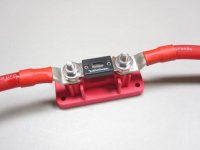
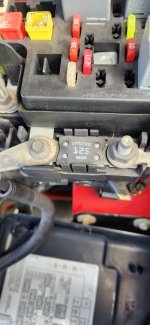
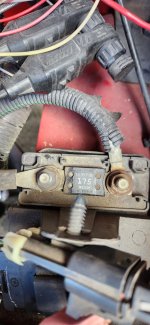
Will this work for the inline fuse that will be on the long run of wire from the switch to the starter? I was thinking a 200 amp fuse for the inline fuse. The 2 main fuses under the fuse box in the engine bay are 125amp and 175amp. Still trying to figure this out.
Attachments
Makes me happy to hear Levi is still in business.
Customer service is still top knotch as well!Makes me happy to hear Levi is still in business.