Alternator issue?

2004LB7

Super Moderator
Staff member
Dec 15, 2010
8,661
3,127
113
Norcal
GF's 2013 Mazda 3. This could possibly go in the spark plug section but it's really more about electrical and the charging system.

On the above car, GF said she had the battery replaced maybe 1.5 years ago. Over the last few months she's been experiencing a low battery no start. With engine running the alternator is only putting out about 13.8 volts. Amperage is about 15 amps into the battery and about 15 amps going to the rest of the vehicle shortly after starting. Doesn't change much when tuning on loads like head lights or AC. Little bit higher to account for the additional draw but no change in voltage or current into the battery

Too the car to AutoZone to see what their machine says. Battery checked out ok. Alternator, diodes ok, but reported bad regulator. Gave her a quote for a replacement costing nearly $300 and that was their budget item. They actually where nice and said they don't recommend getting the alternator through them as they are overpriced and Rock Auto or others can provide a replacement for about half the cost

Decided to try pick and pull for $35. What is the chance a car gets junked because a bad alternative. Found a nice alternator that looked clean and the vehicle had some body damage from a small collision. Installed the replacement used alternator and the voltage was exactly the same at 13.8. ????

Unplug the connector and voltage drops to 12.5v. plug it back in and goes up to 13.8v.

Online searing seems to indicate that this vehicle is supposed to have a current sensor on the negative battery post. But I don't see one. Apparently this behavior is an indication it's bad.

The other thing I will likely do is stick my scope on the control line and the feedback line to see if this replacement alternator is receiving and sending the correct signals. Supposedly PWM with duty cycle being the output of the alternator and the feedback being how much load the alternator is being subject too.

Anyone familiar with these Mazda alternator control schemes and what I should check next?
 

2004LB7

Super Moderator
Staff member
Dec 15, 2010
8,661
3,127
113
Norcal
Ok. I think I figured something out from the forums. The Mazda 3 typically has a flooded lead acid battery. This doesn't require as high of a voltage to drive current and charge the battery. But those who charge them put for AGM like she has needs to reprogram the BCM to accommodate the change. And it looks like Forscan can do this. And luckily I have one. Might just need to purchase a license or whatever they use for programming. Only used it for scanning so far.

I think I'll give this a try first and see how it goes
 

2004LB7

Super Moderator
Staff member
Dec 15, 2010
8,661
3,127
113
Norcal
Welp, not as great as I thought. There was no battery menu or any way to change the profile. But I did do a reset which I've read is supposed to be done when replacing the battery. Voltage now seems to be more steady around 14.2 volts. A little low for my liking but definitely better.

I do want to measure the current running into the battery vs what's running the loads to see if that's improved. And measure the battery resting voltage after sitting overnight to see if it's come up any. She will take it to work tomorrow and see if she needs a jump afterwards 🤞
 

2004LB7

Super Moderator
Staff member
Dec 15, 2010
8,661
3,127
113
Norcal
I not on the up and up with all vehicles, first time I've heard of needing to program the bcm for battery type
Looks like a ford, and possibly other, thing. Really only on newer vehicles that prioritize MPG. Apparently it's a strategy they are using now to have the ECM/PCM have more control over the alternator output so it can reduce the load on the engine and reduce stress on older batteries. It sounds like as the battery ages the PCM or possibly in this case the BCM will slowly reduce voltage to try and account for the age of the battery. If you just throw another battery at it without telling it the battery is new it will continue to use the old battery profile and the voltage gets worse

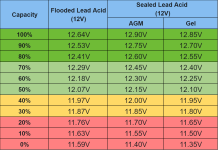
And if you change battery types, from say a flooded to AGM, there is a slight optimal voltage difference between them
12v-lead-acid-battery-voltage-chart.png
 

Ridin'GMC

I like red
May 20, 2010
719
53
28
MA
Interesting about the ecm has to be reset for the battery. My Cadillac ATS does the same thing as the Mazda operates. During the day with no lights on it'll operate at 12.2-12.5 volts until you hit the brakes and jump to roughly 13v then back to the same when the brakes are off. At night, it'll kick on to 13.5-14.5v depending on the load you have on running. Sometimes with the a/c on during the day, it'll hold 13.5v. It was strange at first to me thinking my alternator took a dump. Watching it closely as the lower voltage, I clearly could see an extra 1-2 mpg which was interesting to see at the least.

Does your battery have a fuse block on top of it? When mine went bad, it would have intermittent voltage spikes and sometimes get too low of a voltage of 11v. Replaced that and it gained 2 volts. The littlefuse mega multi fuse block junction on the battery side inside the plastic cover has a small break that would cause that issue.
 

2004LB7

Super Moderator
Staff member
Dec 15, 2010
8,661
3,127
113
Norcal
Interesting about the ecm has to be reset for the battery. My Cadillac ATS does the same thing as the Mazda operates. During the day with no lights on it'll operate at 12.2-12.5 volts until you hit the brakes and jump to roughly 13v then back to the same when the brakes are off. At night, it'll kick on to 13.5-14.5v depending on the load you have on running. Sometimes with the a/c on during the day, it'll hold 13.5v. It was strange at first to me thinking my alternator took a dump. Watching it closely as the lower voltage, I clearly could see an extra 1-2 mpg which was interesting to see at the least.

Does your battery have a fuse block on top of it? When mine went bad, it would have intermittent voltage spikes and sometimes get too low of a voltage of 11v. Replaced that and it gained 2 volts. The littlefuse mega multi fuse block junction on the battery side inside the plastic cover has a small break that would cause that issue.
It foes have a fuse block on the positive terminal. Alternator voltage reads the same on either side. About 0.2V higher right st the alternator due to voltage drop on the wires. Might upgrade them to a heavier gauge to gain a small boost
 

2004LB7

Super Moderator
Staff member
Dec 15, 2010
8,661
3,127
113
Norcal
My '14 Cruze has an amp clamp in the negative. I was seeing 12.6-12.8, disconnected it and it runs 13.8-14.2 now
I did read about some models having that current sensor on the negative terminal. This particular one doesn't have it. Would have been an easy solution if it did.

Right now it's just holding. Or at least it seems to be starting ok in the morning. This weekend when it sits for a day, I'll measure the battery voltage and see if it's charging properly
 

2004LB7

Super Moderator
Staff member
Dec 15, 2010
8,661
3,127
113
Norcal
Did a resting voltage check on the battery after she has been driving to and from work each day. Let it sit for a day and measured voltage. Sitting at 12.25 volts which is around 60% charged. Alternator is still sitting at 13.8V at idle and 14.0 with some RPMs.

Going to hook up the FordScan and see of I can find the relevant pids to check the alternator command and load. See if the ECU thinks the alternator is at zero load and that's why it doesn't command more voltage. Maybe a break in the line or bad regulator if so. If everything looks good, I'm at a loss

Maybe an external regulator. I've rigged them into alternators before that worn't meant to take them. I have a spare alternator that I could open and soldier some wires to the appropriate connections and feed them out to the regulator
 

jlawles2

Well-known member
Jan 28, 2010
1,122
64
48
Danbury, TX
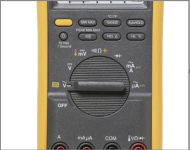
If the alternator is PWM regulated, with either a scope or a good meter you can see what the demand is from the computer. I checked the one on my 2024 with my Fluke 87. Put it in DC voltage mode and press the Hz button 2x. Gives PWM on time.

1783335643735.png
 

2004LB7

Super Moderator
Staff member
Dec 15, 2010
8,661
3,127
113
Norcal
If the alternator is PWM regulated, with either a scope or a good meter you can see what the demand is from the computer. I checked the one on my 2024 with my Fluke 87. Put it in DC voltage mode and press the Hz button 2x. Gives PWM on time.

View attachment 136575
Supposedly PWM controlled. I have a scope. It's the duty cycle that apparently controls the alternator and the load reporting is also the same.
 

johnmyster

Member
Nov 6, 2023
72
25
18
Lynchburg, Virginia
Assuming your 2013 is similar to our 2012 skyactiv...

Ours got 7 years out of the factory battery but has been hard on them ever since. It seems to be doing better since we had a recall/tsb performed where they adjust the charging profile. Before, the headlights would pulse (voltage swing) when slowing down for a turn at night. I think I was barely within the period to get it done for free (not notification sent out) but IIRC it was only 1/2 hour labor anyway.

13.8 running should be enough to charge a battery unless you've got a bad connection to it.

Since you bring it up, I'll make it a point to hook the Autel to it and see if there's a battery reset option in the menus that has never been touched since the factory battery was pulled.
 

2004LB7

Super Moderator
Staff member
Dec 15, 2010
8,661
3,127
113
Norcal
Assuming your 2013 is similar to our 2012 skyactiv...

Ours got 7 years out of the factory battery but has been hard on them ever since. It seems to be doing better since we had a recall/tsb performed where they adjust the charging profile. Before, the headlights would pulse (voltage swing) when slowing down for a turn at night. I think I was barely within the period to get it done for free (not notification sent out) but IIRC it was only 1/2 hour labor anyway.

13.8 running should be enough to charge a battery unless you've got a bad connection to it.

Since you bring it up, I'll make it a point to hook the Autel to it and see if there's a battery reset option in the menus that has never been touched since the factory battery was pulled.
Do you happen to have that TSB number? Maybe it needs the update, if it's applicable

While 13.8V is enough to change the battery, it's a flow charge that doesn't restore the loss on short drives. She has to do 30+ minutes to get a proper charge but her work is 10-15 minutes. So as the week goes on the battery gets lower and lower until I have to put the charger on it over the weekend.

From what I've read, there is no specific "battery reset" but instead it's a BMS reset that essentially does the same thing. From what I've gathered, it is supposed to be done when a new battery is installed so the BMS will allow higher current ss the battery will have lower internal resistance and can accept a higher charge

If you replaced the battery without resetting the BMS then it will continue to run the lower old battery profile and as the new battery gets a little older it will drop even further. Eventually it get to a point where it won't really charge and you need a new battery + a reset

I used Forscan and reset the BMS and that allowed the alternator to get up to 14.2V with some RPM on the engine. Enough to keep the battery charged enough to prevent needing to be jumped every few days. But it's still only getting roughly a 60% charge which will shorten the life of the battery.

Hopefully there is a TSB that will address the programming for the battery charge profile
 

johnmyster

Member
Nov 6, 2023
72
25
18
Lynchburg, Virginia
Do you happen to have that TSB number? Maybe it needs the update, if it's applicable

While 13.8V is enough to change the battery, it's a flow charge that doesn't restore the loss on short drives. She has to do 30+ minutes to get a proper charge but her work is 10-15 minutes. So as the week goes on the battery gets lower and lower until I have to put the charger on it over the weekend.

From what I've read, there is no specific "battery reset" but instead it's a BMS reset that essentially does the same thing. From what I've gathered, it is supposed to be done when a new battery is installed so the BMS will allow higher current ss the battery will have lower internal resistance and can accept a higher charge

If you replaced the battery without resetting the BMS then it will continue to run the lower old battery profile and as the new battery gets a little older it will drop even further. Eventually it get to a point where it won't really charge and you need a new battery + a reset

I used Forscan and reset the BMS and that allowed the alternator to get up to 14.2V with some RPM on the engine. Enough to keep the battery charged enough to prevent needing to be jumped every few days. But it's still only getting roughly a 60% charge which will shorten the life of the battery.

Hopefully there is a TSB that will address the programming for the battery charge profile
I think this one is what I referenced when I took it in:


The symptom was the headlights but it was overall charging system related. That said, the car has always been subjected to short commutes and has always been sufficient for charging, so perhaps I'm giving you a false lead.