so would you say the insulation is "average"? most newer homes have good to great insulation while older homes could be poor.
off the top of my head, 3 tons seems appropriate for 1200 sf unless the insulation was pretty bad.
return line temp doesn't look out of line but discharge line is way too low for your outside temperatures. you should be seeing temps closer to outdoor temps or slightly warmer. makes me think the refrigerant is boiling in the high pressure line. only way that happens is the refrigerant is low from leaking out.
inspect the indoor evaporator coil for icing, dirt, clogged filters ect.
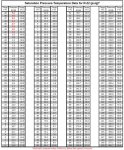
the 300/150 psi is in reference to the design test pressure and not the operating pressure. if the coils are clean, the fans are all working, etc. then the pressures for a properly operating system should be closer to 65-68 psi on the low side and 250-300* on the high. of course you need to take into account the indoor and outdoor temps when judging those pressures. take a look at the attached pressure temperature chart. you want the inside temp of the coil to be above freezing but not so warm that it doesn't cool well. 38-40* is a good temp to shoot for. if you look at the chart, 38-40* runs at 65-68 psi. but this all depends on the air temp running across the coil, or in other words, the indoor return temp. if it is warm in the house it may be as high as 85 psi. also, keep in mind, if the run between your condenser and evaporator is long there may be a few psi drop on top of that. for the high pressure side, it needs to run hot enough to be able to reject the heat into the outside air. this will normally run around 20* to 30* above outside temps. looking at the chart again, we can see that if it is 95* outside then we need to run about 115-125* which puts you at 243-278 psi. add a little dirt, sun, etc and that pressure can run a little higher.
just remember, it is easy to get hung up on exact numbers but that is the wrong way to do it. the proper way to measure charge is to weight in the specified amount. the other ways are measuring superheat or subcooling depending on the unit type. but pressure can get you close if you know what you are looking for